Does Shuffle Require KYC? Yes, Earlier than Advertised
In short: Yes. Shuffle requires identity details before the cashier opens, and a government document before a first withdrawal under clause 5.2. The operator states no fixed dollar threshold triggers a document check, so the trigger is discretionary.
The site sells itself on fast access without lengthy verification, and registration really does take an email and a date of birth. The verification arrives later, at the moment money becomes involved, and it arrives earlier than the terms alone would suggest. We walked the whole path on a new account to find out exactly where each gate sits.
Shuffle Asks for KYC, Despite the Pitch
The storefront promises a crypto casino without lengthy KYC, with fast access and more privacy. The signup form backs that up. It wants an email and a date of birth, nothing more.
Clause 5.2 sets the real bar. You hand over a passport, national ID or driving licence once you hit a threshold the operator picks, and always before your first withdrawal. Elsewhere the same operator says no fixed dollar amount triggers a check. Put those together and the trigger is whatever it decides, whenever it decides. That is the opposite of what the word threshold usually means.
The KYC Gate We Hit Ourselves
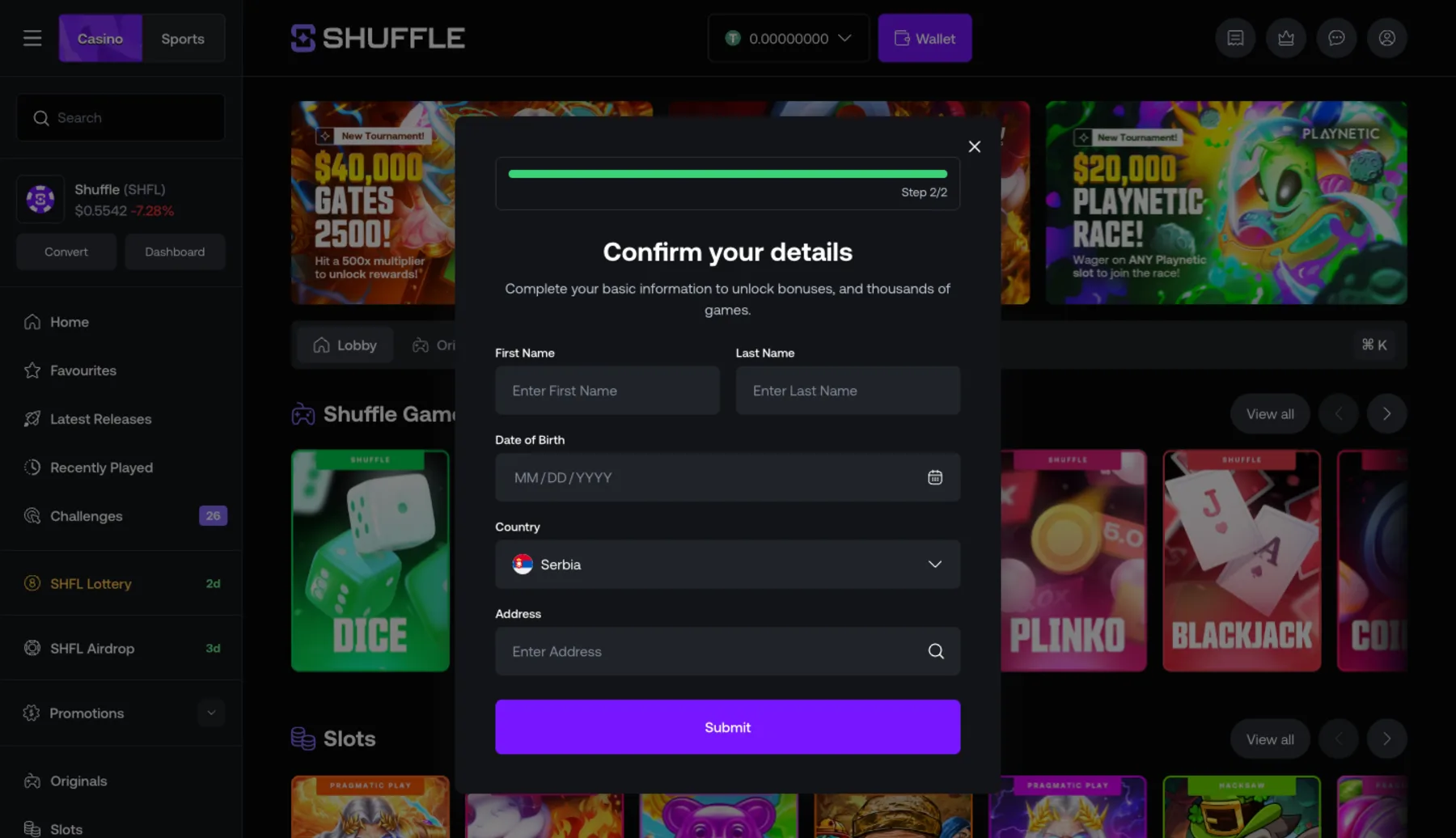
We opened an account and clicked the wallet. Instead of a cashier we got a form headed Confirm your details, Step 2 of 2, asking for a first name, a last name, a date of birth, a country and a street address, with the operator's own caption about unlocking bonuses and thousands of games.
So the first identity gate sits before the first deposit, not before the first withdrawal. That is earlier than clause 5.2 describes, and it is the single most useful thing we learned about this operator's onboarding. It also means the published cashier limits, which the operator says are shown at the cashier, cannot be seen by anyone unwilling to hand over those details.
Clear Verification Before You Deposit
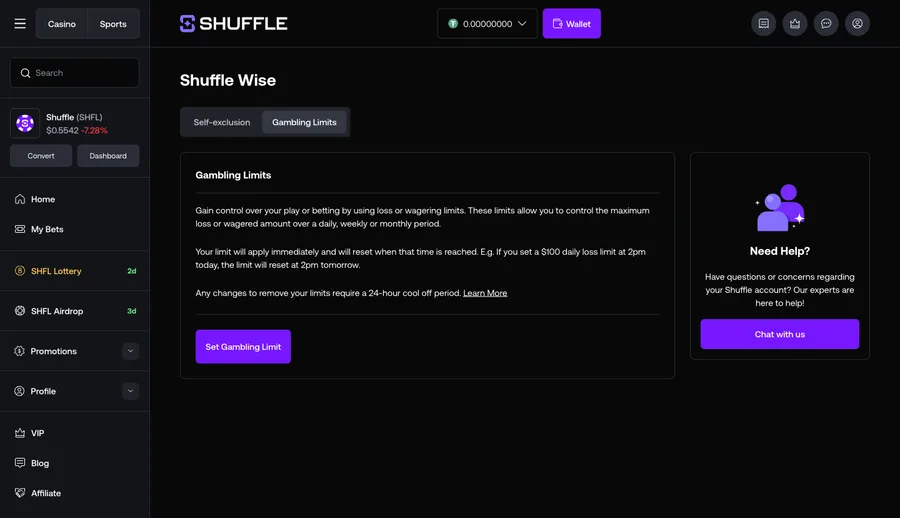
The dominant complaint about this operator is a withdrawal held in verification review, sometimes for weeks. Clause 7.2 sets no deadline for completing a check, so a hold is permitted to run as long as it runs.
Nothing kills that risk entirely. You cut it by verifying while no money waits on the other side. Otherwise you meet the requirement exactly when you want to move a balance. This advice costs nothing and heads off the most common problem on the site.
Limits of Our KYC Walkthrough
Two things stayed out of reach. We did not complete the document stage, because that means uploading a passport or licence belonging to a real person, and we do not create identity records to test a site. And we could not see the cashier's published limits, since they sit behind the form.
One more item belongs in any honest answer here. Customer data was exposed through a breach at a supplier in October 2025, with reports disagreeing on whether identity documents were among it. Anyone weighing whether to upload a passport should know that the operator's supplier chain has leaked once and that no first-party account of the incident was published.
Which Gate Sits Where
| Stage | What is asked | Source |
|---|---|---|
| Registration | Email and date of birth | Clause 3.1, confirmed by us |
| Opening the cashier | Name, date of birth, country, address | Confirmed by us, |
| Before first withdrawal | Government identity document | Clause 5.2 |
| On request, any time | Source of funds or wealth evidence | Clause 5.4 |
| Every deposit and withdrawal | Blockchain screening | Operator's AML policy |
Figures current as of ; the operator's live terms prevail.
Key Terms Used on This Page
- KYC
- Know your customer, the identity checks a licensed operator must run. Here the first gate arrives at the cashier.
- Discretionary trigger
- A check the operator starts when it chooses. Shuffle states no fixed dollar amount triggers one.
- Source of funds
- Evidence of where money came from, requestable under clause 5.4, which can freeze deposits and withdrawals until assessed.
- Chainalysis
- The blockchain analytics service the operator runs against every deposit and withdrawal.
- Connected account
- Another account sharing a household, device, IP or payment method, which clauses 4.1 to 4.4 require you to declare.
Deposits and identity checks stay on the operator's own secure site.
Related Reading on This Casino
More on this game, from the same section first: